Buyer's Remorse Over Nuclear Energy in Germany

pass08_bavaria We've mentioned a few times that the Germans have experience a kind of buyer's remorse over their decision to phase out nuclear energy by 2020. We haven't really found a good explanation of what the Germans would have to do to reverse this - presumably get a bill through the lower and upper houses of their parliament -  but Prime Minister Angela Merkel is definitely making it a campaign issue:

Merkel spoke at an election rally in Bavaria, where voters go to the polls this month. [Nuclear] Reactors account for 60 percent of the state's power and switching them off would force it to buy electricity from neighboring Czech Republic, she was cited as saying.

Now, we wouldn't be surprised to learn that Bavarians have a rivalry with the Czechs that make this pitch more potent, or at least are responsive to a nationalist plea, but we don't actually know this. What we do know is that this ban has a lot of heat on it lately and we'll be surprised if it lasts all the way to the next federal election a year or so from now - they seem to run their campaign season as long as we do.

(Well, maybe not so surprised - the current German government is a right-left coalition, a seemingly unworkable melange that will need to sort itself out before progress gets made. We'd say wherever the Green Party lands coalition-wise might determine the course of events.)

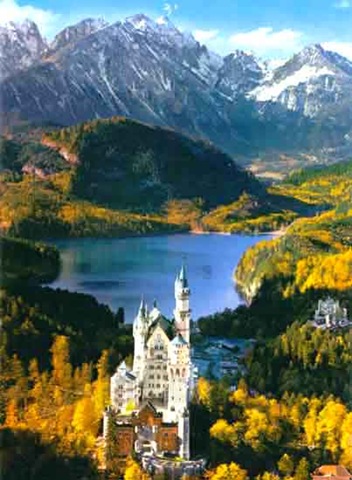
Picture of a Bavarian somewhere. When I was in Germany, my hosts  made fun of Bavarians as, essentially, hicks. Just reminded me that wherever one is, there's someone nearby to tease. In New York City, it was the "bridge and tunnel" folk, that is, New Jerseyans and Long Islanders.

Comments

Norske-Division said…
For Bavarians it would be seen as a step backwards to be depending upon the Czechs for electricity. It's not that they hate the Czechs or anything, they've got a good relationship, but Bavaria has traditionally (and is still) more developed infrastructure wise and industrially. To draw an analogy to America, it would be like Texas relying on Mexico for electricity.

And yes, any change in the law would need to pass through both Bundestag and the Bundesrat, and then be signed by the Bundeskanzler. But the Bundesrat is unlikely to stand in the way of any such law, given recent changes in the law. I will ask my friend from Germany to be sure though.

Popular posts from this blog

Activists' Claims Distort Facts about Advanced Reactor Design

Below is from our rapid response team . Yesterday, regional anti-nuclear organizations asked federal nuclear energy regulators to launch an investigation into what it claims are “newly identified flaws” in Westinghouse’s advanced reactor design, the AP1000. During a teleconference releasing a report on the subject, participants urged the Nuclear Regulatory Commission to suspend license reviews of proposed AP1000 reactors. In its news release, even the groups making these allegations provide conflicting information on its findings. In one instance, the groups cite “dozens of corrosion holes” at reactor vessels and in another says that eight holes have been documented. In all cases, there is another containment mechanism that would provide a barrier to radiation release. Below, we examine why these claims are unwarranted and why the AP1000 design certification process should continue as designated by the NRC. Myth: In the AP1000 reactor design, the gap between the shield bu...

How many nuclear plants does it take to meet the world's energy needs?

Several weeks ago Joshua Pearce at Clarion University in Pennsylvania released a study titled “ Thermodynamic limitations to nuclear energy deployment as a greenhouse gas mitigation technology .” In the study he stated... nuclear energy production would have to increase by 10.5% per year from 2010 to 2050 to both replace fossil-fuel-energy use and meet the future energy demands. This line, of course, made the headlines and has been picked up by several outlets and blogs . When looking into his calculations for this statement, he made one assumption error that overstated the above sentence by nearly a factor of three. Page 121, Section 4.1 of the study states: Richard Smalley pointed out that in 2004, the global economy consumed the equivalent of 220 million barrels of oil per day, which converted into electricity terms is the equivalent of 14.5 TeraWatts (TW), or 14,500,000 MegaWatts (MW) (2005). … With a nuclear plant having about 1000 MW (1 GW) of capacity, we would need 14,500...

What Happens During a Refueling Outage?

You may have noticed over the past few weeks that a number of nuclear plants are shut down for refueling outages or are resuming operations after just returning from one. This type of routine outage usually occurs in the spring or fall when electricity demand is low so that nuclear reactors can replace about one-third of the spent fuel rods with new fuel and conduct other routine maintenance and repairs at the plant. To get a better sense of how refueling works at a nuclear energy facility, I spoke with Marcus Nichol, NEI’s senior project manager for used fuel storage and transportation, and asked him to explain the basics. Why does a nuclear plant need to replace one-third of its fuel? Nichol: The main purpose of a refueling outage is to replace older fuel that is depleted—meaning it can no longer efficiently produce energy from nuclear fission reactions—with new fuel. This “used fuel” has typically been used in the reactor for four-and-a-half to six years before it is pe...