Critical Differences Between the U.S. and Japanese Nuclear Energy Industries

Yesterday, news broke that an independent investigation by the Japanese parliament has concluded that the March 2011 accident at the Fukushima Daiichi nuclear power plant was a "man-made" failure that could be laid at the feet of both Tokyo Electric Power Company and the government. According to Tokyo University professor emeritus and Committee Chair Kiyoshi Kurokawa, the Fukushima accident "cannot be regarded as a natural disaster ... It could and should have been foreseen and prevented. And its effects could have been mitigated by a more effective human response."

The report also points out that elements unique to Japanese culture and industry also played a role in Japan's response to the events at Fukushima:
“This was a disaster ‘Made in Japan, ”Kurokawa said in the report’s introduction. “Its fundamental causes are to be found in the ingrained conventions of Japanese culture: our reflexive obedience; our reluctance to question authority; our devotion to ‘sticking with the program,’ our groupism, and our insularity.”
But if the accident at Fukushima was unique to Japan, what differentiates their culture and nuclear industry from others around the world, especially here in the U.S.? Just prior to the Institute of Nuclear Power Operations’ release of a detailed timeline of the events at Fukushima, I asked NEI's Chief Nuclear Officer, Tony Pietrangelo, to clarify what sets the U.S. nuclear energy industry apart from Japan:


To read the entire report, click here.

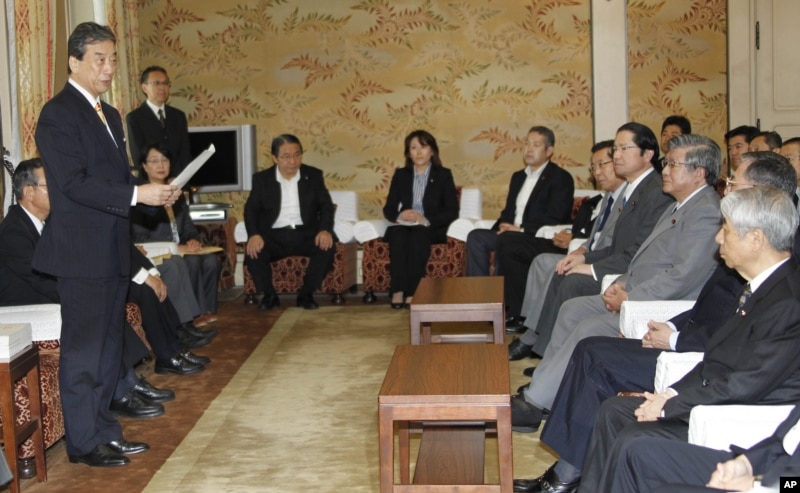
Fukushima Nuclear Accident Independent Investigation Commission Chairman Kiyoshi Kurokawa, addresses Japanese legislators yesterday while presenting his committee's report. Photo courtesy of Voice of America.

Comments

jimwg said…
I dunno, maybe it's me, but is the seeming conclusion of this report that were there no quake or tsunami the accident would've happened anyway? I mean you can push the culture factor/excuse so far! Do they also blame airline crashes due weather and ferry disasters in storms as solely human-caused incidents? To me, there's also a weird "Don't blame mother nature!" aspect in this that maybe in some convoluted way makes nuclear energy appear a little more "unnatural" and demonic while giving shines to "natural" solar power and windmills. Maybe it's me, but I just have that queer feeling about that. Yes, maybe it's my American view, but Japan has nothing to be ashamed of at what happened at Fukushima. Their 40-year-old structures survived major rare natural events and their engineering sacrifice resulted in zero casualties. Zero casualties. Were our occasional Gulf rig and refinery accidents -- or most all industrial accidents -- so merciful -- and as memorable. Yet most Japanese over there act like the reactors did all the killing! Critics are missing the forest for the trees with that point. Yes, response mistakes were made (especially with the far more socially damaging evacuation), but to be fair and equal I'd very much like to see the head honchos of their Oil and Gas works hauled up on the carpet to explain and apologize for the lives lost and property damaged on their tuft by the same quake.

James Greenidge
Queens NY
Anonymous said…
That is my concern as well. There seems to be a singular focus on an industrial facility damaged by a natural event with zero resulting casualities. Yet not a word (in the popular media) about the Okura dam (i.e., "renewable" energy)collapse that wiped out an entire village of 1,800 people, the one bullet train washed out to sea that killed hundreds, the oil refineries that burned for weeks in the Tokyo area. Compared to all the caterwauling about the Fukushima "disaster", there has been deafening silence about the real disasters. I wonder why that is...?
Anonymous said…
@anon -
do you have any info or links on the dam failure? I googled for it but all I find for hits are blog comments like yours above. I'm not saying it didnt happen, but where's the info? I'd like to see anything, even if it is in Japanese. Thanks.
Anonymous said…
see
http://apu.blog.so-net.ne.jp/2011-08-23

Photos of the intact Okura dam, taken 8/23/2011. Apparently the news of it's demise are premature.

OTOH, Fujinuma reservoir did collapse, killing 7.
http://www.nilim.go.jp/lab/bbg/saigai/h23tohoku/110314sabo.pdf

Popular posts from this blog

Activists' Claims Distort Facts about Advanced Reactor Design

Below is from our rapid response team . Yesterday, regional anti-nuclear organizations asked federal nuclear energy regulators to launch an investigation into what it claims are “newly identified flaws” in Westinghouse’s advanced reactor design, the AP1000. During a teleconference releasing a report on the subject, participants urged the Nuclear Regulatory Commission to suspend license reviews of proposed AP1000 reactors. In its news release, even the groups making these allegations provide conflicting information on its findings. In one instance, the groups cite “dozens of corrosion holes” at reactor vessels and in another says that eight holes have been documented. In all cases, there is another containment mechanism that would provide a barrier to radiation release. Below, we examine why these claims are unwarranted and why the AP1000 design certification process should continue as designated by the NRC. Myth: In the AP1000 reactor design, the gap between the shield bu...

How many nuclear plants does it take to meet the world's energy needs?

Several weeks ago Joshua Pearce at Clarion University in Pennsylvania released a study titled “ Thermodynamic limitations to nuclear energy deployment as a greenhouse gas mitigation technology .” In the study he stated... nuclear energy production would have to increase by 10.5% per year from 2010 to 2050 to both replace fossil-fuel-energy use and meet the future energy demands. This line, of course, made the headlines and has been picked up by several outlets and blogs . When looking into his calculations for this statement, he made one assumption error that overstated the above sentence by nearly a factor of three. Page 121, Section 4.1 of the study states: Richard Smalley pointed out that in 2004, the global economy consumed the equivalent of 220 million barrels of oil per day, which converted into electricity terms is the equivalent of 14.5 TeraWatts (TW), or 14,500,000 MegaWatts (MW) (2005). … With a nuclear plant having about 1000 MW (1 GW) of capacity, we would need 14,500...

What Happens During a Refueling Outage?

You may have noticed over the past few weeks that a number of nuclear plants are shut down for refueling outages or are resuming operations after just returning from one. This type of routine outage usually occurs in the spring or fall when electricity demand is low so that nuclear reactors can replace about one-third of the spent fuel rods with new fuel and conduct other routine maintenance and repairs at the plant. To get a better sense of how refueling works at a nuclear energy facility, I spoke with Marcus Nichol, NEI’s senior project manager for used fuel storage and transportation, and asked him to explain the basics. Why does a nuclear plant need to replace one-third of its fuel? Nichol: The main purpose of a refueling outage is to replace older fuel that is depleted—meaning it can no longer efficiently produce energy from nuclear fission reactions—with new fuel. This “used fuel” has typically been used in the reactor for four-and-a-half to six years before it is pe...