Issues in Context: The NRC Webinar on Palisades Nuclear Power Plant and Pressurized Thermal Shock

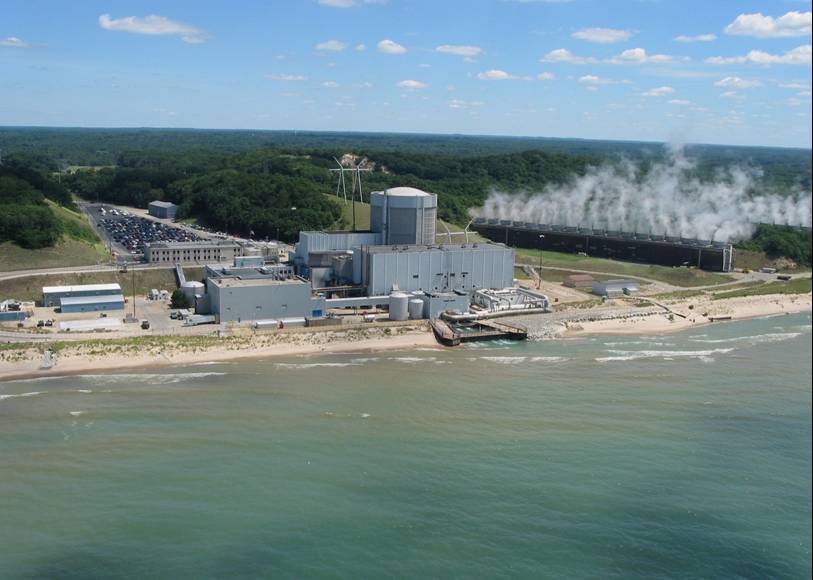
Palisades Nuclear Power Plant
In recent days, we've seen a lot of media coverage concerning an upcoming NRC webinar on the Entergy's Palisades Nuclear Generating Station in Michigan. Earlier today, Entergy released the following statement by Tony Vitale, the plant's site vice president:
"The Palisades nuclear plant is a safe and secure facility, and we have an NRC license to operate this facility through 2031.

The Nuclear Regulatory Commission has strict rules, regulations and limits for all aspects of nuclear plant operations. This includes a program to monitor nuclear power plant reactor vessels and the potential impact of a rare accident scenario – pressurized thermal shock – in which a large amount of cold water is injected into the reactor resulting in rapid cooling of the reactor vessel.

This is not a new topic or one that is unique to Palisades. In fact, for decades pressurized thermal shock has been well understood and well monitored by the owners and operators of the nation’s pressurized water reactors.

Every pressurized water reactor plant in the nation is required by the NRC to continually update its calculations to confirm reactor vessel strength – meaning every plant must conduct periodic reactor vessel inspections and analyze reactor vessel samples. Consistent with these NRC requirements, Palisades will conduct these inspections and analysis during our refueling outage this fall.

We have every reason to believe the test results will again demonstrate the safety and strength of the Palisades reactor vessel – which will enable us to continue operating through the end of our license in 2031. We will submit an updated evaluation to the NRC for its review in the spring of 2014.

Our unrelenting commitment and focus are on operating Palisades at the highest levels of safety and reliability – now and for many years to come.”
Thanks to Entergy for providing some needed context to counter some of the breathless coverage.

Comments

jimwg said…
Releasing reassuring technical statements is well and good for informing blogs, but it's NOT how the general public gets news. The "fair" media is just dandy on it's toes reporting "ominous" nuclear situations, but are crickets on retractions or corrections, willfully letting fear and doubt hang in the wind for all the fearful to wonder. Energy companies and nuclear facilities have to GET THEIR WORD "OUT THERE" to counter this biased nonsense! It's really not that complicated or expensive. A few thirty second adult and educational ads does wonders. Being MIA in the mass-media front only sprouts frets and consternation in favor of antis.

James Greenidge
Queens NY

Popular posts from this blog

Activists' Claims Distort Facts about Advanced Reactor Design

Below is from our rapid response team . Yesterday, regional anti-nuclear organizations asked federal nuclear energy regulators to launch an investigation into what it claims are “newly identified flaws” in Westinghouse’s advanced reactor design, the AP1000. During a teleconference releasing a report on the subject, participants urged the Nuclear Regulatory Commission to suspend license reviews of proposed AP1000 reactors. In its news release, even the groups making these allegations provide conflicting information on its findings. In one instance, the groups cite “dozens of corrosion holes” at reactor vessels and in another says that eight holes have been documented. In all cases, there is another containment mechanism that would provide a barrier to radiation release. Below, we examine why these claims are unwarranted and why the AP1000 design certification process should continue as designated by the NRC. Myth: In the AP1000 reactor design, the gap between the shield bu...

What Happens During a Refueling Outage?

You may have noticed over the past few weeks that a number of nuclear plants are shut down for refueling outages or are resuming operations after just returning from one. This type of routine outage usually occurs in the spring or fall when electricity demand is low so that nuclear reactors can replace about one-third of the spent fuel rods with new fuel and conduct other routine maintenance and repairs at the plant. To get a better sense of how refueling works at a nuclear energy facility, I spoke with Marcus Nichol, NEI’s senior project manager for used fuel storage and transportation, and asked him to explain the basics. Why does a nuclear plant need to replace one-third of its fuel? Nichol: The main purpose of a refueling outage is to replace older fuel that is depleted—meaning it can no longer efficiently produce energy from nuclear fission reactions—with new fuel. This “used fuel” has typically been used in the reactor for four-and-a-half to six years before it is pe...

How Much Land Does Nuclear, Wind and Solar Really Need?

Not too long ago, we reviewed a report that looked at nuclear energy (and other energy sources) as biodiversity agents. This had to do, in part, with the amount of land a facility needs to function. Nuclear energy and fossil fuel plants use relatively little, wind farms and solar arrays quite a lot of land . Based on an objective and transparent analysis of our sustainable energy choices, we have come to the evidence-based conclusion that nuclear energy is a good option for biodiversity conservation (and society in general) and that other alternatives to fossil fuels should be subjected to the same cost–benefit analyses (in terms of biodiversity and climate outcomes, as well as sociopolitical imperatives) before accepting or dismissing them. Writer Barry Brook, who collected 75 scientists to endorse his paper, is interested in land use as it impacts flora and fauna. Biodiversity concerns do not get as much play as they might – and, when they do, it annoys many when land is withdraw...