One of These Things is Not Like the Other...

Can you tell the difference?

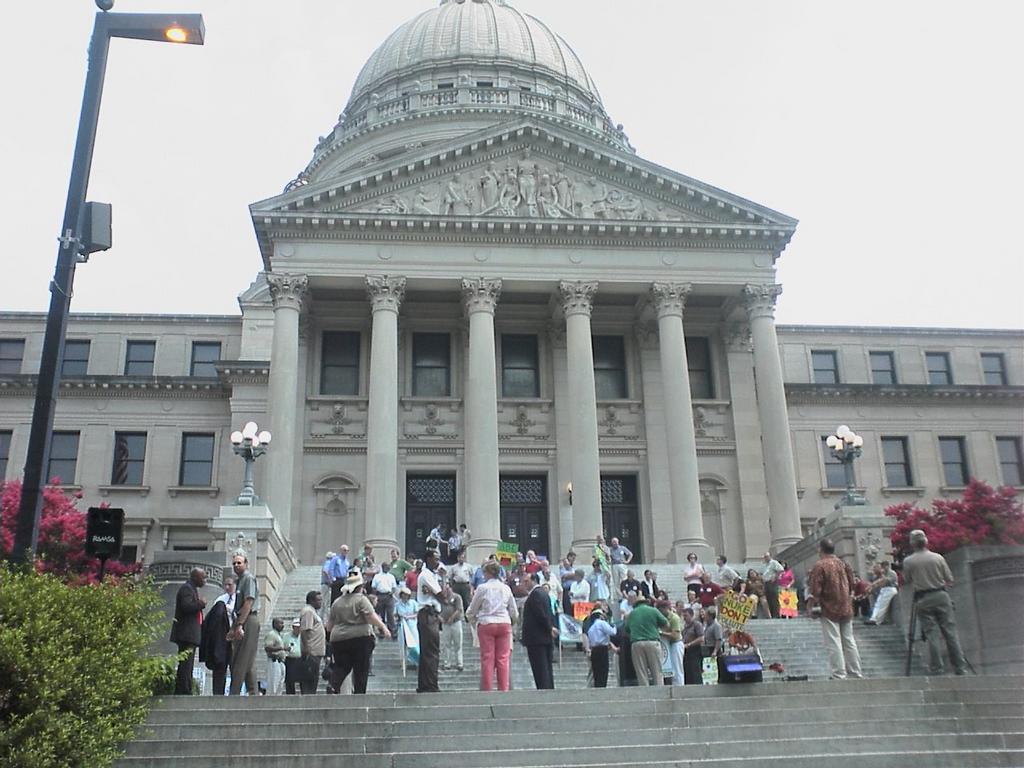
This photo is from the pro-nuclear rally in Jackson today:


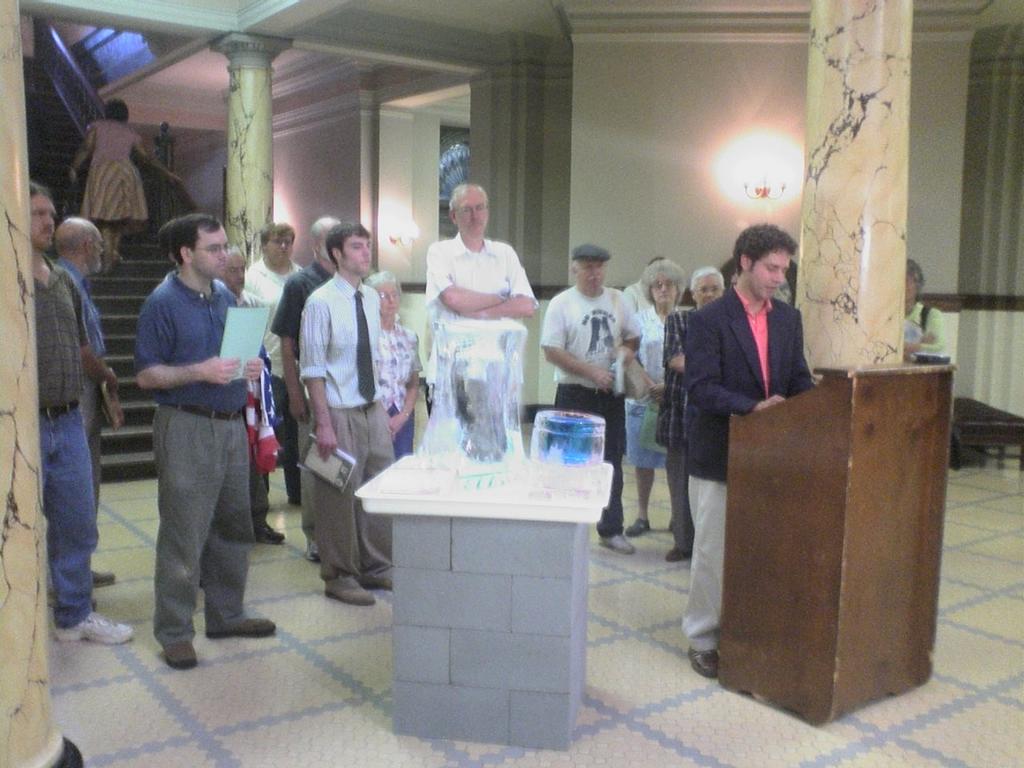
This one is from the anti-nuclear protest a short time later:


Hint: Count the heads!

Comments

Kevin McCoy said…
Lisa, I had read about anti-nukes who used an ice sculpture of a nuclear power plants as part of a publicity stunt, so I was pleased to finally see a picture of such a sculpture. Pretty cool, huh?

My understanding of the symbolism is perhaps a bit different from that of the antis. Ice is commonly used to cool something that is too warm. So the message I get from the picture is that the antis are saying, "The solution to global warming is sitting right here in front of us, and we refuse to admit it."
Anonymous said…
Pretty cool, Entergy bussed a bunch of Grand Goof employees to Jackson.
Anonymous said…
Wow Paul, that kind of creative name calling is sure to convince a lot of people to take up the "No Nukes" mantra ... very professional!
Lisa Stiles said…
So Paul, did the cost of your trip to Mississippi come out of your own pocket or did NIRS pay for it?

Yes, there were some Entergy employees there. I don't know how many attended, but at least a few of them located in Jackson used their lunch hour to attend the rally. But even if there were nuclear professionals from Grand Gulf in attendance, what does that prove? Entergy employees are the people closest to the operation of the plant. If the claims of antinuclear activists are true, their health and safety, and that of their families are the most at-risk. If the people closest to operations are confident enough in the safety and security of the plant to publicly support new nuclear, I believe it is a powerful demonstration to the layperson that the risks are manageable.

Furthermore, my colleagues from Virginia used their own vacation time and paid their own expenses for the trip. NA-YGN members in North Carolina volunteered their time to make posters for the rally. There are many examples of people volunteering their time and their money to support new nuclear power because they believe it should remain an important part of a balanced energy mix in the this country.

In short, to posit that anyone that supports nuclear power must be a lackey of the big bad corporations is a flimsy, and offensive, attempt to attack the messenger.

Popular posts from this blog

Activists' Claims Distort Facts about Advanced Reactor Design

Below is from our rapid response team . Yesterday, regional anti-nuclear organizations asked federal nuclear energy regulators to launch an investigation into what it claims are “newly identified flaws” in Westinghouse’s advanced reactor design, the AP1000. During a teleconference releasing a report on the subject, participants urged the Nuclear Regulatory Commission to suspend license reviews of proposed AP1000 reactors. In its news release, even the groups making these allegations provide conflicting information on its findings. In one instance, the groups cite “dozens of corrosion holes” at reactor vessels and in another says that eight holes have been documented. In all cases, there is another containment mechanism that would provide a barrier to radiation release. Below, we examine why these claims are unwarranted and why the AP1000 design certification process should continue as designated by the NRC. Myth: In the AP1000 reactor design, the gap between the shield bu...

How many nuclear plants does it take to meet the world's energy needs?

Several weeks ago Joshua Pearce at Clarion University in Pennsylvania released a study titled “ Thermodynamic limitations to nuclear energy deployment as a greenhouse gas mitigation technology .” In the study he stated... nuclear energy production would have to increase by 10.5% per year from 2010 to 2050 to both replace fossil-fuel-energy use and meet the future energy demands. This line, of course, made the headlines and has been picked up by several outlets and blogs . When looking into his calculations for this statement, he made one assumption error that overstated the above sentence by nearly a factor of three. Page 121, Section 4.1 of the study states: Richard Smalley pointed out that in 2004, the global economy consumed the equivalent of 220 million barrels of oil per day, which converted into electricity terms is the equivalent of 14.5 TeraWatts (TW), or 14,500,000 MegaWatts (MW) (2005). … With a nuclear plant having about 1000 MW (1 GW) of capacity, we would need 14,500...

What Happens During a Refueling Outage?

You may have noticed over the past few weeks that a number of nuclear plants are shut down for refueling outages or are resuming operations after just returning from one. This type of routine outage usually occurs in the spring or fall when electricity demand is low so that nuclear reactors can replace about one-third of the spent fuel rods with new fuel and conduct other routine maintenance and repairs at the plant. To get a better sense of how refueling works at a nuclear energy facility, I spoke with Marcus Nichol, NEI’s senior project manager for used fuel storage and transportation, and asked him to explain the basics. Why does a nuclear plant need to replace one-third of its fuel? Nichol: The main purpose of a refueling outage is to replace older fuel that is depleted—meaning it can no longer efficiently produce energy from nuclear fission reactions—with new fuel. This “used fuel” has typically been used in the reactor for four-and-a-half to six years before it is pe...