NRC Throws a Punch in Massachusetts

MA.State.House.iStock_000000831934Small The Nuclear Regulatory Commission tends to float a bit above the political fray - you could say it sticks to its knitting, keeps it head down, insert additional cliche here - so it's a genuine surprise that it has made salient comments - any comments at all - about state legislation that blasts nuclear energy.

But that's what happened in Massachusetts:

In July, the Bay State's House passed a resolution in support of efforts to have independent safety assessments conducted at nuclear power plants in Massachusetts, Vermont and New Hampshire [we don't know how Vermont and New Hampshire feel about this, but knowing New Englanders, probably snorts all around].

Then there's this:

The Legislature also resolved that it's time the nation begin its transition "away from nuclear power to an affordable, clean and sustainable national energy policy."

And what has inflamed the pawk the caw types?

The resolution had several bullet points that were of concern to the House of Representatives. Those included were accidents at Three Mile Island and Chernobyl and an earthquake that affected nuclear reactors in Japan.

TMI? Chernobyl? How, uh, 1990 of them. And thus does the NRC put things into better perspective:

"I understand the concerns raised by the Commonwealth," wrote Samuel J. Collins, an NRC regional administrator, in response to the resolution. "However, I feel it is necessary to address some of the statements and assumptions conveyed in that document to dispel any misconceptions you may have with our regulatory role, performance, or processes."

We won't go over all of that here, because you know what Collins is going to say,though by all means read through the story - Collins responds to everything in a measured fashion and proves himself an excellent spokesman.

What's notable here is that the NRC has not let this legislative mischief go without comment. The implication of their response is that while issues around nuclear energy should be fully discussed, and that men and women of good will will have variant viewpoints, one must still start with the knowledge necessary to make informed decisions and good legislation.

We'd guess that Massachusetts lawmakers are up to some election year politicking and pushing some go-to fear buttons rather heedlessly. Wonderful to see the NRC throw the warm water of facts into the gummy mix.

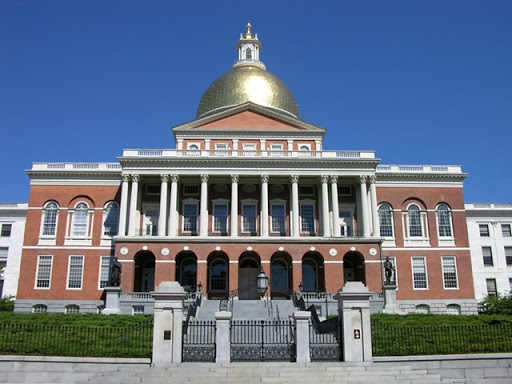
Picture of the Massachusetts State House.

Comments

Bill said…
Mark Flanagan: "- so it's a genuine surprise that [the Nuclear Regulatory Commission] has made salient comments - any comments at all - about state legislation that blasts nuclear energy."
and
"What's notable here is that the NRC has not let this legislative mischief go without comment."

Am I being unduly cynical to think that the NRC is responding, not so much to defend nuclear energy, but to defend the *NRC*?

"That ISA was a unique, one-time inspection in response to a specific set of concerns," wrote Collins. "The NRC's Reactor Oversight Process, implemented in 2000, incorporates nearly all of the key inspection elements addressed in the Maine Yankee ISA. The Commission remains convinced that the oversight process is more effective than an ISA because it is a continual assessment process and it provides for increased oversight of plants and programs that exhibit declining performance."
Anonymous said…
If you have time (lots of time), take a look at the comments posted to the newspaper article.
Joffan said…
The NRC defending the NRC is good enough. The example of Vermont Yankee's license renewal is an example of past failure to do so, where (apparently) three different bodies are all covering the same ground, wasting the time and effort on both sides that could be used more productively. ISAs are a similar waste of time - they appear to stem from the conspiracy theory that the NRC are not independent of the reactor operators.
Anonymous said…
The Maine Yankee ISA was performed at the request of the governor - who caught wind of the allegation that Yankee Atomic had been "cheating" on their SB LOCA analysis for the plant. As far as I know, the ISA did conclude that the allegation was correct. Industry behavior like that fans the flames of the conspiracy theorists, and it's hard to blame them in cases like that.

Popular posts from this blog

Activists' Claims Distort Facts about Advanced Reactor Design

Below is from our rapid response team . Yesterday, regional anti-nuclear organizations asked federal nuclear energy regulators to launch an investigation into what it claims are “newly identified flaws” in Westinghouse’s advanced reactor design, the AP1000. During a teleconference releasing a report on the subject, participants urged the Nuclear Regulatory Commission to suspend license reviews of proposed AP1000 reactors. In its news release, even the groups making these allegations provide conflicting information on its findings. In one instance, the groups cite “dozens of corrosion holes” at reactor vessels and in another says that eight holes have been documented. In all cases, there is another containment mechanism that would provide a barrier to radiation release. Below, we examine why these claims are unwarranted and why the AP1000 design certification process should continue as designated by the NRC. Myth: In the AP1000 reactor design, the gap between the shield bu...

How many nuclear plants does it take to meet the world's energy needs?

Several weeks ago Joshua Pearce at Clarion University in Pennsylvania released a study titled “ Thermodynamic limitations to nuclear energy deployment as a greenhouse gas mitigation technology .” In the study he stated... nuclear energy production would have to increase by 10.5% per year from 2010 to 2050 to both replace fossil-fuel-energy use and meet the future energy demands. This line, of course, made the headlines and has been picked up by several outlets and blogs . When looking into his calculations for this statement, he made one assumption error that overstated the above sentence by nearly a factor of three. Page 121, Section 4.1 of the study states: Richard Smalley pointed out that in 2004, the global economy consumed the equivalent of 220 million barrels of oil per day, which converted into electricity terms is the equivalent of 14.5 TeraWatts (TW), or 14,500,000 MegaWatts (MW) (2005). … With a nuclear plant having about 1000 MW (1 GW) of capacity, we would need 14,500...

What Happens During a Refueling Outage?

You may have noticed over the past few weeks that a number of nuclear plants are shut down for refueling outages or are resuming operations after just returning from one. This type of routine outage usually occurs in the spring or fall when electricity demand is low so that nuclear reactors can replace about one-third of the spent fuel rods with new fuel and conduct other routine maintenance and repairs at the plant. To get a better sense of how refueling works at a nuclear energy facility, I spoke with Marcus Nichol, NEI’s senior project manager for used fuel storage and transportation, and asked him to explain the basics. Why does a nuclear plant need to replace one-third of its fuel? Nichol: The main purpose of a refueling outage is to replace older fuel that is depleted—meaning it can no longer efficiently produce energy from nuclear fission reactions—with new fuel. This “used fuel” has typically been used in the reactor for four-and-a-half to six years before it is pe...