Quick hits: IAEA Confab, AREVA in Japan

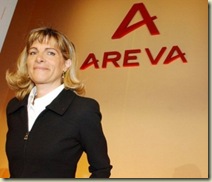
Anne-Lauvergeon-2 This speaks for itself:

The International Atomic Energy Agency will host a high-level conference on nuclear safety from June 20 to 24 in Vienna to discuss lessons learned from Japan's nuclear crisis, Kyodo News reported Wednesday, citing the agency's director general.

Yukiya Amano said he expects conference participants to make an initial assessment of the accident at the Fukushima Daiichi nuclear plant in northeastern Japan, which was hard hit by an earthquake and tsunami on March 11.

Participants will likely include representatives of various countries' foreign affairs, energy and other ministries, IAEA sources told Kyodo.

---

The CEO of French nuclear reactor maker Areva says she will meet with Japanese officials to improve the situation at the quake-damaged Fukushima Daiichi nuclear power plant.

Speaking to an NHK reporter on her arrival at Narita Airport, near Tokyo, on Wednesday afternoon, Anne Lauvergeon pledged full cooperation. She brought along a team of experts, the first such group to arrive from France since the outbreak of the incident.

Good for AREVA. It’ll be interesting to find out what they do there.

---

But why leave it to the French?

The Japanese and U.S. governments are working together to tackle trouble at the Fukushima Daiichi nuclear power plant.

The Japanese government has set up 4 working groups led by Deputy Chief Cabinet Secretary Tetsuro Fukuyama and prime ministerial advisor Goshi Hosono.

The groups include members of Japan's Nuclear and Industrial Safety Agency and related ministries; U.S. military forces stationed in Japan; and the U.S. Nuclear Regulatory Commission.

AREVA’s Anne Lauvergeon.

Comments

jimwg said…
Bizarre Priorities
It's certainly not exclusive to Fox, so when they take the time (4 minutes) and trouble to invite a snake handler to explain about the Bronx Zoo's runaway baby cobra and the habits and habitats of cobras, how toxic its venom is and how to treat the bite and who to call if you spot it, then the next feature is a 5 second fear-bite about radiation turning up in Washington milk. Five seconds of alarm, not education. They just couldn't spare merely 15-seconds describing what low levels and health effects it is relative with other toxins and chemicals to allay a panic or more unreasonable doomsday nuclear-phobia -- unless this is exactly the effect the "enlightening" media desires. I hope the nuclear industry/research really grasps that there's a snowballing passion out there to _bury_ them and takes the fight to the media for minds and souls with fact and perspective over fear.

Jmaes Greenidge
Charles Monneron said…
why leave it to the French ?

Simply because they do reprocessing and Japanese use their technology. The domain of expertise of the few people that were sent was decontamination of water, something that must be very common in reprocessing.

Popular posts from this blog

Activists' Claims Distort Facts about Advanced Reactor Design

Below is from our rapid response team . Yesterday, regional anti-nuclear organizations asked federal nuclear energy regulators to launch an investigation into what it claims are “newly identified flaws” in Westinghouse’s advanced reactor design, the AP1000. During a teleconference releasing a report on the subject, participants urged the Nuclear Regulatory Commission to suspend license reviews of proposed AP1000 reactors. In its news release, even the groups making these allegations provide conflicting information on its findings. In one instance, the groups cite “dozens of corrosion holes” at reactor vessels and in another says that eight holes have been documented. In all cases, there is another containment mechanism that would provide a barrier to radiation release. Below, we examine why these claims are unwarranted and why the AP1000 design certification process should continue as designated by the NRC. Myth: In the AP1000 reactor design, the gap between the shield bu...

What Happens During a Refueling Outage?

You may have noticed over the past few weeks that a number of nuclear plants are shut down for refueling outages or are resuming operations after just returning from one. This type of routine outage usually occurs in the spring or fall when electricity demand is low so that nuclear reactors can replace about one-third of the spent fuel rods with new fuel and conduct other routine maintenance and repairs at the plant. To get a better sense of how refueling works at a nuclear energy facility, I spoke with Marcus Nichol, NEI’s senior project manager for used fuel storage and transportation, and asked him to explain the basics. Why does a nuclear plant need to replace one-third of its fuel? Nichol: The main purpose of a refueling outage is to replace older fuel that is depleted—meaning it can no longer efficiently produce energy from nuclear fission reactions—with new fuel. This “used fuel” has typically been used in the reactor for four-and-a-half to six years before it is pe...

How Much Land Does Nuclear, Wind and Solar Really Need?

Not too long ago, we reviewed a report that looked at nuclear energy (and other energy sources) as biodiversity agents. This had to do, in part, with the amount of land a facility needs to function. Nuclear energy and fossil fuel plants use relatively little, wind farms and solar arrays quite a lot of land . Based on an objective and transparent analysis of our sustainable energy choices, we have come to the evidence-based conclusion that nuclear energy is a good option for biodiversity conservation (and society in general) and that other alternatives to fossil fuels should be subjected to the same cost–benefit analyses (in terms of biodiversity and climate outcomes, as well as sociopolitical imperatives) before accepting or dismissing them. Writer Barry Brook, who collected 75 scientists to endorse his paper, is interested in land use as it impacts flora and fauna. Biodiversity concerns do not get as much play as they might – and, when they do, it annoys many when land is withdraw...